Preparing for a doctor’s visit can make a real difference. Many people arrive feeling unsure, rushed, or overwhelmed. As a result, they may forget symptoms, miss important explanations, or leave without clear next steps.
However, learning how to prepare for a doctor’s visit helps you feel calmer and more confident. It also helps your doctor understand you better. With a few simple steps, your appointment can become clearer, more focused, and more helpful.
This guide explains how to prepare for a doctor’s visit in plain language. You will learn what to do before, during, and after your appointment so you can get the most out of your care. If you want a broader foundation, start by exploring our understanding doctor visits guidance.
Why Preparing for a Doctor’s Visit Is Important
Doctor appointments are often short. During that time, your doctor must listen, examine, review records, and decide what to do next.
Because of this, preparation matters.
When you prepare for a doctor’s visit:
-
Your main concern is discussed first
-
Symptoms are easier to understand
-
Misunderstandings are reduced
-
Instructions are clearer
-
Follow-up is more likely to happen
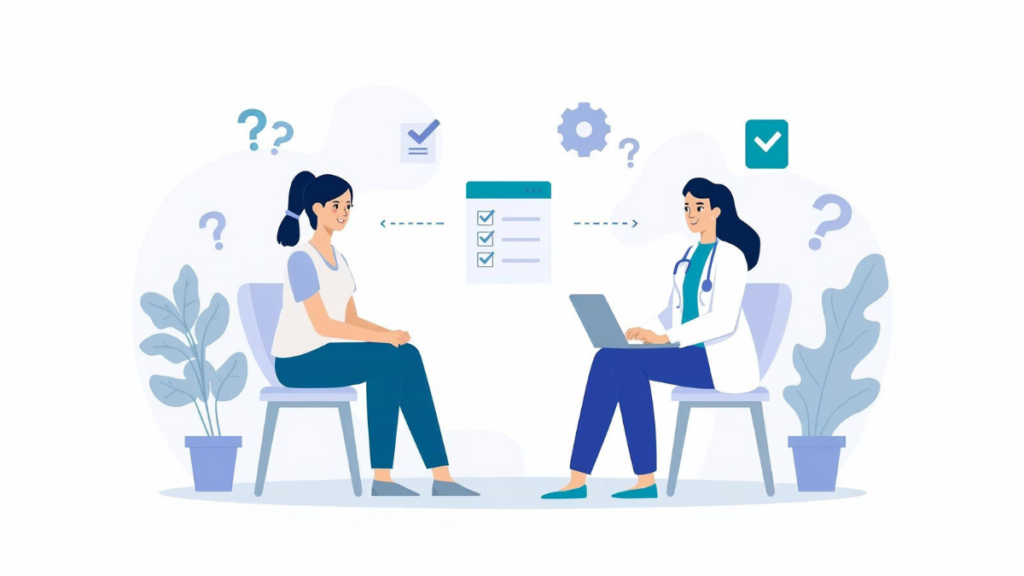
In other words, preparation leads to better communication. It does not mean diagnosing yourself. Instead, it means helping your doctor help you.
1. Identify Your Main Concern First
Before the appointment, ask yourself one question:
“What is the main reason for this visit?”
Write it down in one clear sentence.
For example:
-
“I want to understand why I feel tired most afternoons.”
-
“I am concerned about recurring headaches.”
-
“I need help understanding my test results.”
This step is essential. It keeps the visit focused, especially if time runs short.
2. Track Your Symptoms Clearly Before the Visit

Tracking symptoms is one of the most effective ways to prepare for a doctor’s visit.
You do not need medical terms. Instead, write down:
-
When the symptom started
-
How often it happens
-
How long it lasts
-
What makes it better or worse
-
How it affects your daily life
For example, saying “a dull headache most evenings that improves with rest” is far more helpful than “I feel unwell.”
You can learn more from other authoritative platforms like medlineplus with their patient instructions.
3. Make a Complete Medication and Supplement List
Another important step in preparing for a doctor’s visit is listing everything you take.
Include:
-
Prescription medicines
-
Over-the-counter drugs
-
Vitamins and supplements
-
Herbal products
Write down names and how often you take them. This information helps prevent medication interactions and confusion. These Medication Safety Basics can be learned progressively too from other sources.
4. Bring Recent Test Results or Health Records
If you have had recent tests, bring them with you. Even if they seem unrelated, they may provide helpful context.
These may include:
-
Blood tests
-
Imaging reports
-
Previous visit summaries
5. Prepare Questions in Advance
Appointments can move quickly. Therefore, writing questions ahead of time is essential.
Good questions include:
-
“Can you explain this in simple terms?”
-
“Is this serious or something to monitor?”
-
“What are my options?”
-
“What should I do next?”
-
“When should I follow up?”
Asking questions is not rude. On the contrary, it improves understanding. You can learn more on Preparing for Your GP Appointment before the actual visit.
6. Bring a Support Person If Needed
Sometimes, having another person helps. A trusted support person can:
-
Take notes
-
Help remember instructions
-
Ask follow-up questions
-
Provide emotional support
This is especially helpful during stressful or complex visits.
7. Take Notes and Confirm the Next Steps
Before leaving the appointment, make sure you understand:
-
What to do next
-
When to do it
-
Why it matters
-
When to return
If something is unclear, ask again. Clear instructions reduce worry later.
8. Keep a Simple Personal Health Folder
After the visit, store your information in one place. This may be a folder, notebook, or phone app.
Include:
-
Visit summaries
-
Test results
-
Medication lists
-
Symptom notes
Over time, this makes preparing for a doctor’s visit much easier.
Final Takeaway: Preparation Leads to Better Care
Learning how to prepare for a doctor’s visit gives you more control and confidence. By organizing your concerns, tracking symptoms, preparing questions, and confirming next steps, you improve communication and reduce stress.
Ultimately, better preparation leads to clearer conversations and better care.