

Seeing an unfamiliar number on a lab report can be unsettling. If you’ve recently had an A1C test and you’re unsure what the result means, you’re not alone. Many people feel anxious when they see blood sugar–related tests, especially if the number doesn’t look “perfect.”
This guide explains A1C levels in simple, reassuring language, helping you understand what the test measures, why doctors use it, and how to think about your result calmly and confidently, without jumping to conclusions.
This article is written for patients, caregivers, and anyone without a medical background who wants clarity rather than confusion.
If you’re learning how to interpret lab tests more broadly, our guide on understanding medical test results explains how different blood tests are meant to be read and compared.
Why A1C results often feel confusing
Blood sugar is something most of us associate with diabetes, so it’s natural to worry when an A1C test is ordered. The challenge is that many people assume the A1C test works like a single blood sugar reading taken at one moment in time. It doesn’t.
Instead, the A1C test gives a longer-term picture. Without that context, it’s easy to misinterpret the number or assume it automatically means something serious. Understanding what the test does and what it does not do can immediately reduce anxiety.
What is an A1C test?
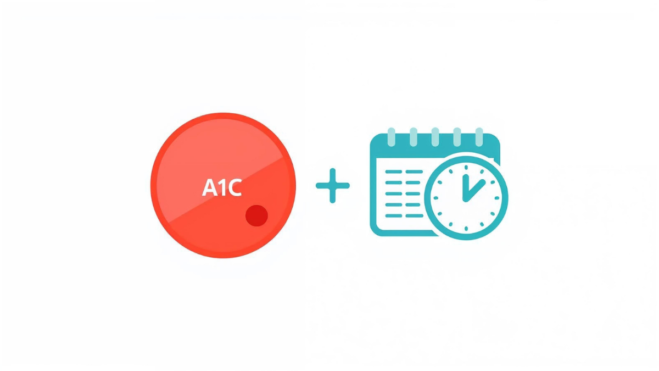
The A1C test, also called the hemoglobin A1C test, measures how much sugar has been attached to your red blood cells over time.
Here’s the simple idea:
-
Red blood cells carry oxygen around your body.
-
Sugar in your blood naturally sticks to these cells.
-
Red blood cells live for about 2–3 months.
-
The A1C test looks at how much sugar has attached to them during that period.
So rather than showing your blood sugar today, the A1C test reflects your average blood sugar over the past few months. That’s why doctors find it helpful it smooths out daily ups and downs.
How the A1C test is different from a finger-prick glucose test
A finger-prick or fasting glucose test shows what your blood sugar is doing at a single moment. That number can change based on:
-
What you ate recently
-
Stress or illness
-
Exercise
-
Sleep
-
Medications
The A1C test, on the other hand, is less affected by day-to-day variation. It helps doctors see patterns over time, not just one snapshot.
Both tests can be useful, but they answer different questions.
A1C levels explained: understanding general ranges
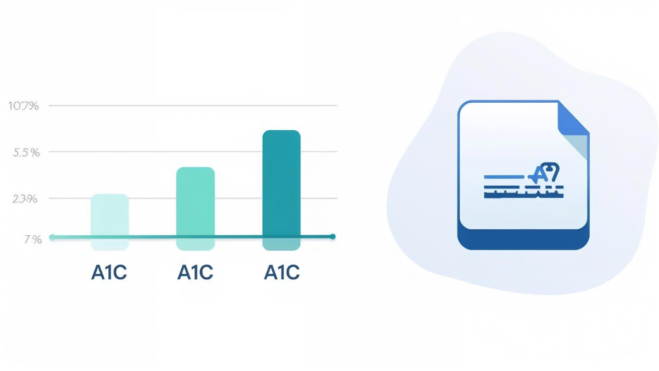
When you receive an A1C result, it’s usually reported as a percentage. Higher percentages reflect higher average blood sugar over time.
| A1C Range | How It’s Often Described | What This Usually Means (Plain Language) |
|---|---|---|
| Below 5.7% | Within the usual range | Average blood sugar levels over the past few months are generally within the expected range for most people. Doctors still consider symptoms, history, and overall health. |
| 5.7% – 6.4% | Higher than usual | Blood sugar levels have been higher than average over time. This range often leads doctors to monitor trends or repeat testing rather than draw conclusions. |
| 6.5% or higher | Significantly elevated | Average blood sugar levels have been higher over several months. Doctors usually confirm results and review the full health picture before explaining what this means. |
Important to know:
- These ranges are general reference points, not a diagnosis.
- A single A1C result does not define your overall health.
- Certain conditions, such as anemia or pregnancy, can affect A1C results.
It’s also important to understand this carefully:
-
A1C ranges are guidelines, not strict boundaries.
-
A result slightly above or below a reference range does not automatically mean disease.
-
Doctors always interpret A1C values in context, alongside symptoms, history, and other tests.
Rather than focusing on whether a number is “good” or “bad,” it’s more helpful to think in terms of trends and overall health.
If you are new to interpreting medical results, you may find it helpful to start with the site’s guide on Understanding Your Health Information.
That foundation makes tests like A1C much easier to understand.
Why doctors order an A1C test
In practice, there are several common situations where an A1C test may be ordered, such as:
-
Screening: To identify long-term blood sugar patterns in people who have risk factors for diabetes
-
Monitoring: To track changes over time in people already under follow-up for blood sugar concerns
-
Clarifying results: When fasting or random blood glucose tests provide unclear or inconsistent findings
-
Routine care: As part of broader, preventive health checkups
Importantly, an A1C test is rarely used on its own. It is usually interpreted alongside other health information to form a more complete picture.
What factors can influence A1C results?

Although the A1C test is reliable, it’s not perfect. Several factors can affect results in ways that have nothing to do with diet or lifestyle.
These include:
-
Anemia or blood loss (which affects red blood cells)
-
Certain blood disorders
-
Pregnancy
-
Kidney or liver disease
-
Recent illness or surgery
-
Some medications
-
Individual differences in red blood cell lifespan
Because of this, doctors sometimes repeat the test or use additional blood sugar tests for clarity. A single A1C result should never be viewed as a final answer on its own.
What an A1C test does not tell you
Understanding the limits of the test is just as important as understanding what it measures.
An A1C test does not:
-
Show daily blood sugar highs and lows
-
Explain why symptoms are happening
-
Replace clinical evaluation or discussion
-
Predict future health outcomes on its own
-
Capture recent short-term changes
This is why healthcare providers rarely make decisions based on A1C alone.
Common myths about A1C levels
Myth 1: “One A1C number defines my health”
Health is far broader than a single lab value. This is elaborated in the article; Definition of Health: What It Truly Means and Why It Matters, which explains why wellbeing includes physical, mental, and social factors, not just test results.
Myth 2: “A slightly high A1C means diabetes”
Not necessarily. Borderline or mildly elevated values often require repeat testing and context, not immediate conclusions.
Myth 3: “A normal A1C means nothing is wrong”
Symptoms still matter. Tests complement how you feel; they don’t replace it.
Myth 4: “Lower is always better”
Very low values can sometimes reflect other medical issues. Balance and context are key.
How doctors think about A1C results
Clinicians don’t just look at the number—they ask questions such as:
-
Has this value changed over time?
-
Does it match the person’s symptoms?
-
Are there conditions that could affect accuracy?
-
How does it fit into the person’s overall health goals?
This broader approach prevents overreaction and supports safer decision-making.
Smart questions to ask about your A1C result
Bringing questions to your appointment can help you feel more confident and involved. Useful questions include:
-
Is this result significantly different from my previous one?
-
Could anything unrelated to blood sugar affect this number?
-
Should the test be repeated?
-
Do we need other tests for a fuller picture?
-
What trends are most important for me to watch?
If you track symptoms or lifestyle changes, pairing that information with your test results can be especially helpful. You may want to review How to Track Symptoms Effectively
to support clearer conversations with your clinician.
Using reliable information when reading about A1C
When searching online, stick to trusted, evidence-based sources. Good educational explanations can be found at:
-
The Centers for Disease Control and Prevention (CDC), which provides patient-friendly overviews of blood sugar tests.
-
The World Health Organization (WHO), which discusses diabetes screening and long-term glucose monitoring
These organisations focus on education rather than fear-based messaging
When to seek medical advice
An A1C result is usually discussed during routine care, not emergencies. However, you should seek professional advice if:
-
Your result is unexpected or unclear
-
You have new or worsening symptoms
-
You’re unsure how the test applies to your situation
-
You’re feeling anxious or confused by the information
No online article can replace a conversation with a qualified healthcare professional who knows your full history.
Putting A1C results into a healthy perspective
Health information should support understanding—not increase worry. Learning how to interpret tests like A1C helps you become a more informed participant in your care, but it’s only one part of the picture.
True health is about patterns, balance, and context over time. Tests are tools, not judgments.
Conclusion: Understanding A1C levels with confidence
When A1C levels are explained clearly, they become far less intimidating. The A1C test is simply a way of looking at long-term blood sugar patterns. It does not diagnose you, predict your future, or define your health on its own.
By understanding what the test measures, what influences results, and what questions to ask, you can approach your A1C result with calm curiosity rather than fear. Used wisely and discussed with your healthcare provider, A1C testing can be a helpful guide and not a source of stress.
Frequently Asked Questions About A1C Tests
An A1C test measures how much sugar has attached to your red blood cells over the past two to three months. It reflects average blood sugar levels over time rather than showing what your blood sugar is on a single day.
A1C results are usually compared to general reference ranges, but “normal” can vary depending on age, health history, and other conditions. Doctors interpret A1C values in context rather than relying on the number alone.
In some situations, A1C results may be influenced by factors such as anemia, pregnancy, kidney disease, recent illness, or conditions that affect red blood cells. If results seem unexpected, doctors may repeat the test or use additional tests for clarity.
A blood glucose test shows your blood sugar at a single moment in time, while an A1C test reflects average blood sugar levels over several months. Both tests are useful but answer different questions.
How often an A1C test is done depends on why it was ordered and your individual health situation. Some people may only need occasional testing, while others may have it checked more regularly as part of ongoing monitoring.