

Thyroid blood tests are commonly ordered, but the results can feel confusing. Many people see terms like TSH, T4, or T3 on a lab report and are unsure what they measure or what the numbers mean. Some worry the results point to a serious condition, while others are left unsure why the test was done at all.
This guide explains thyroid blood tests, what common tests like TSH, T4, and T3 measure, and how doctors usually interpret results in everyday clinical practice.
For a general overview of how lab results are presented and interpreted across different tests, our guide about understanding medical tests may be useful. Likewise, if you’re new to interpreting health information, our cornerstone article; Beginner’s Guide to Understanding Your Health Information, offers a grounding in how to approach medical tests with confidence and clarity.
What Are Thyroid Blood Tests and What Do They Measure?
Thyroid blood tests are laboratory tests that measure hormones involved in thyroid gland function, helping doctors assess how the thyroid is working and how thyroid hormones are regulated in the body.
These tests do not diagnose a condition on their own. Instead, they provide information that doctors interpret alongside symptoms, medical history, and sometimes repeat testing.
Why Doctors Order Thyroid Tests
Your healthcare provider may recommend thyroid testing for several common, non-urgent reasons:
-
You’re feeling unusually tired
-
You’ve noticed changes in weight or appetite
-
You’ve had changes in mood or temperature sensitivity
-
You’re being followed over time after a previous result
-
Routine screening is part of a general check-up
Doctors order tests to get more information, not to immediately label a condition. That’s why thyroid blood tests explained in plain language is so reassuring. It helps you understand why the test is done, not just what the numbers are.
If you’re interested in how medical tests fit into overall health information, our pillar post Beginner’s Guide to Understanding Your Health Information breaks down how lab work, symptoms, and physician conversations all connect.
What Is the Thyroid?
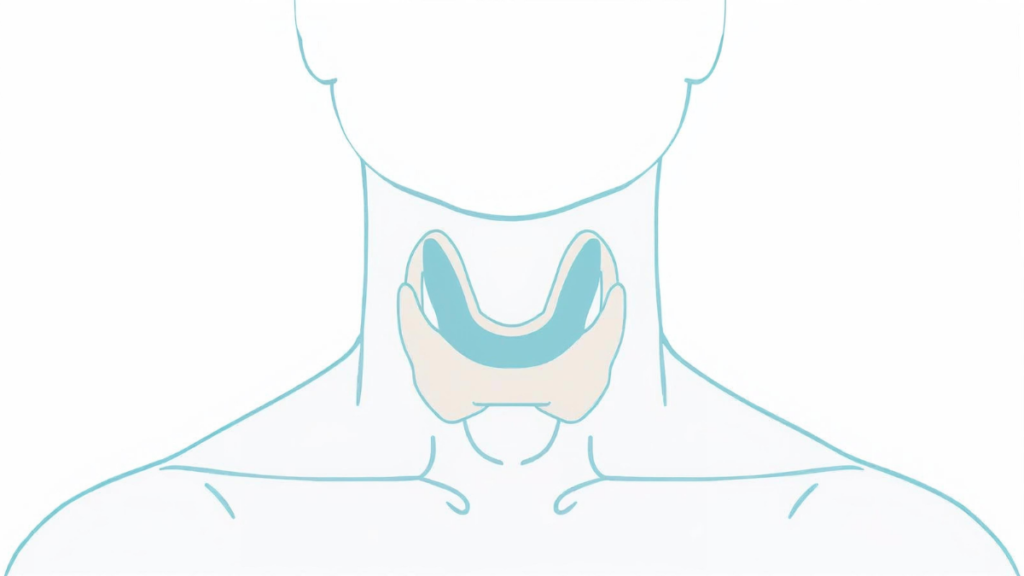
The thyroid is a small, butterfly-shaped gland at the front of the neck. Despite its size, it plays an important role in how the body uses energy and keeps systems running smoothly. Thyroid hormones help regulate metabolism, body temperature, heart rate, and energy balance.
Common Thyroid Blood Tests and What They Measure
Let’s look at the main thyroid tests and what they tell us.
Each plays a slightly different role in showing how your thyroid is working, and when they’re looked at together, they give a fuller picture.
TSH (Thyroid-Stimulating Hormone)
What it measures:
According to Medlineplus; TSH is a hormone made by a small gland (the pitutary) at the base of your brain. It acts like a messenger to tell your thyroid how much thyroid hormone it should make.
Why it matters:
Most doctors start with TSH because it reflects the communication between your brain and your thyroid. If your TSH level is higher than typical, it usually means the brain is telling the thyroid to work harder. If it’s lower, it may mean the thyroid is producing enough or too much hormone.
Remember: TSH doesn’t give a diagnosis by itself, but it’s usually the first step in understanding thyroid test results.
T4 (Thyroxine)
What it represents:
T4 (or thyroxine) is one of the main hormones your thyroid releases into the blood. Much of it circulates as a storage form that the body can convert when needed.
Why it’s tested:
T4 levels help doctors see how much hormone your thyroid actually makes. When paired with a TSH value, it gives context about thyroid activity.
Free T4 measurements, which reflect the portion your body can use; are often more helpful than total T4.
T3 (Triiodothyronine)
What it’s for:
T3 is the active version of thyroid hormone. Your body uses it to carry out many metabolic processes.
When it’s helpful:
T3 isn’t always ordered with every thyroid check. It’s typically added when TSH and T4 values don’t fully explain symptoms, or when more detail is needed.
These three components together i.e. TSH, T3, and T4; are the backbone of most thyroid-focused blood work. For a clear, clinician-friendly overview of TSH, T3, and T4 tests, you can also check out the American Thyroid Association’s thyroid function test guide.
For a patient-friendly overview of thyroid blood tests explained in simple terms, the U.S. National Library of Medicine provides a clear summary of what these tests measure and why they’re used.
How These Tests Work Together
Think of these tests as a conversation:
-
TSH = the message from the brain
-
T4 = what the thyroid produces
-
T3 = what the body actively uses
Understanding thyroid test results means looking at the relationship between them, not one number in isolation.
What Thyroid Tests Do Not Tell You
It’s just as important to know the limits of thyroid testing.
Thyroid tests do not:
-
Diagnose a condition on their own
-
Explain symptoms without context
-
Measure stress, sleep quality, or lifestyle directly
-
Replace a clinical assessment
As discussed earlier, thyroid test results are interpreted alongside symptoms, medical history, and patterns over time, not as isolated numbers.
How Doctors Interpret Thyroid Test Results
These ranges are approximate and may vary slightly between laboratories. Results are always interpreted together with symptoms, medical history, and repeat testing when needed.
| Test | What the Test Measures | Typical Reference Range (Simplified) | What Results Outside the Range May Suggest (In General) |
|---|---|---|---|
| TSH (Thyroid-Stimulating Hormone) | How strongly the brain is signalling the thyroid to work | ~0.4 to 4.0 mIU/L | Higher levels may mean the thyroid is being asked to work harder. Lower levels may mean less stimulation is needed. |
| Free T4 (Thyroxine) | How much thyroid hormone is available in the blood | ~0.8 to 1.8 ng/dL | Lower levels may suggest less hormone is available. Higher levels may suggest more hormone than usual is circulating. |
| Free T3 (Triiodothyronine) | The active thyroid hormone used by body tissues | ~2.3 to 4.2 pg/mL | Lower levels may mean less active hormone is available. Higher levels may mean more active hormone than needed. |
How to Read This Table Without Worry
- These values are guides, not verdicts
- A result slightly outside the range does not automatically mean illness
- Doctors look at patterns across TSH, T3, and T4, not just one number
- Results are often rechecked to confirm trends over time
- Different labs may use slightly different ranges
This is why many people are told their results are “borderline” or “something to monitor” rather than a cause for concern. Mild deviations like this are especially common with thyroid tests. Many people are told their results are “slightly abnormal” even when no thyroid disease is present and no treatment is needed. If you want a practical example of how clinicians usually interpret these borderline results, this explanation of what a slightly abnormal thyroid test result often means can help put those numbers into context.
Lab reports usually show results compared with a reference range. This range reflects where most healthy people’s results tend to fall.
A few reassuring points to remember:
-
Being slightly outside a reference range does not automatically mean illness
-
Reference ranges are based on populations, not individuals
-
Your “normal” may look different from someone else’s
Doctors are trained to look for patterns, not isolated numbers. They also consider factors that can influence results, such as:
-
Recent illness
-
Time of day the test was done
-
Medications or supplements
-
Temporary physical stress
Seeing one unexpected value is rarely a reason for alarm.

How Thyroid Tests Fit Into Overall Health
Thyroid tests are often reviewed alongside other common blood tests like BMP and CMP, which assess kidney function, electrolytes, and metabolism as part of a broader picture of overall health. Thyroid testing is just one piece of a broader health picture. These tests connect with:
-
Your energy and metabolism
-
Your mood and cognitive sharpness
-
Your heart rate and circulation
-
How your body responds to daily life
When you understand what thyroid tests measure, you gain confidence in your own health conversations. It’s not just about laboratory numbers. It is about you, your story, and your wellbeing.
When Follow-Up Is Needed
Follow-up after thyroid testing is very common and usually calm and planned.
This might involve:
-
Repeating a test after some time
-
Monitoring results without immediate action
-
Discussing symptoms alongside results
Follow-up doesn’t mean something is wrong. It usually means your healthcare provider is being thorough and thoughtful.
Conclusion
Thyroid test results are common checkpoints in health care. They are not verdicts. Going through this article removes much of the anxiety people often feel when they see unfamiliar lab results.
The main reassurance points to take away are:
-
These tests are routine.
-
Results often need context.
- Your clinician partners with you, not just your lab report.
-
Building on this, a single value outside a reference range does not define your health. Doctors focus on patterns rather than one result.
Understanding your thyroid tests helps build confidence and supports clearer conversations with your healthcare team. You don’t have to decode results on your own. You now have a framework to read them with calm curiosity rather than fear.
Frequently Asked Questions About Thyroid Tests
Most thyroid blood tests do not require fasting. Your doctor or laboratory will let you know if anything special is needed.
Yes. Thyroid levels can shift naturally. This is why repeat testing is sometimes done, to see trends rather than rely on a single snapshot.
Repeat testing helps confirm whether a change is temporary or persistent. It’s a common and cautious approach.
This happens quite often. Doctors usually look at the full set of results before drawing any conclusions.